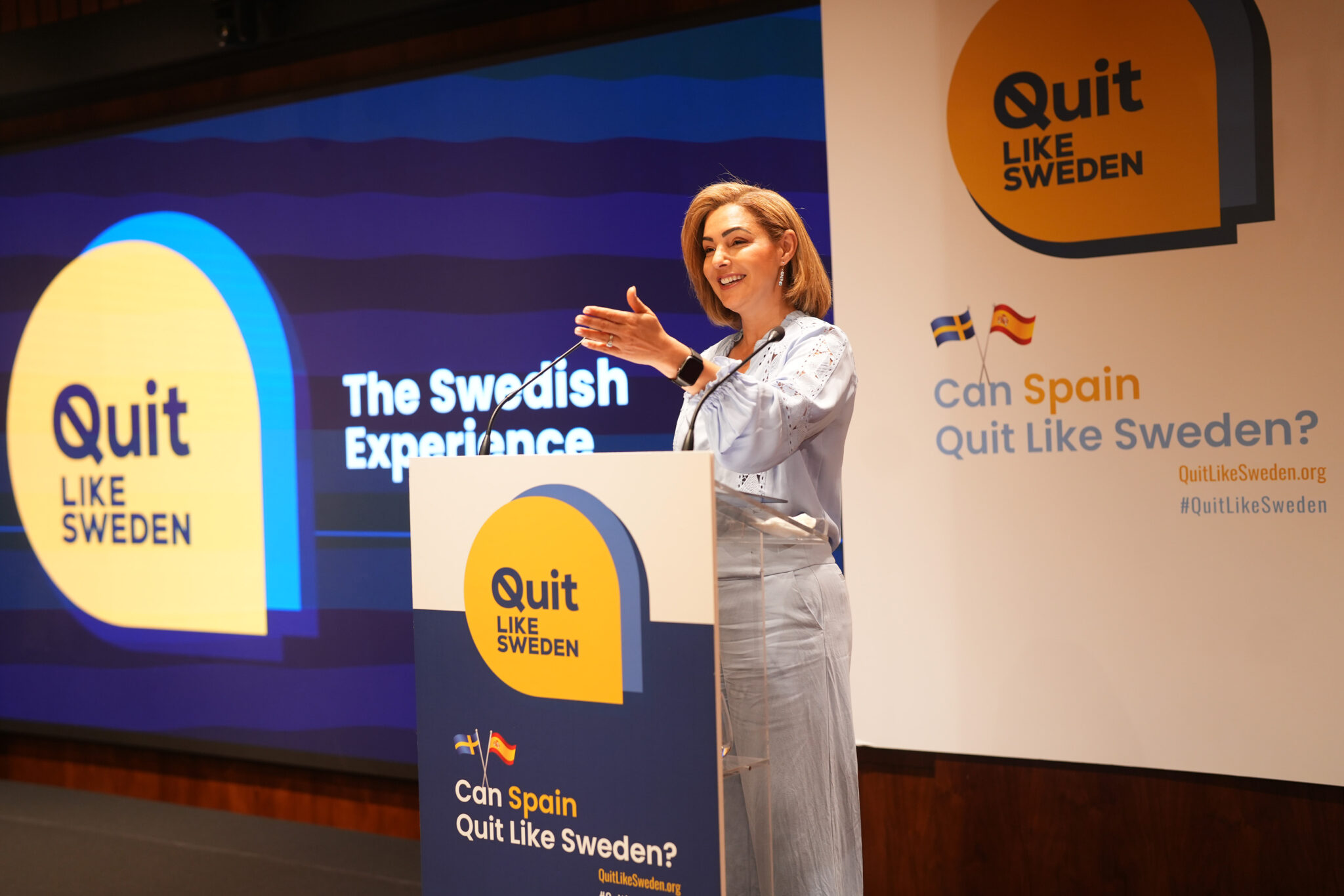
Madrid – Can Spain further reduce cigarette smoking? To answer this question, the harm reduction organisation, Quit Like Sweden (QLS), brought to Madrid last week global public health and smoking cessation experts to discuss why Spain should follow the Swedish model of smoking cessation.
Sweden is a smoking cessation role model. Last year, Sweden achieved a smoking rate of just 5.3%, and is on course to achieve smoke-free status 15 years ahead of the European Union's 2040 target. In contrast, Spain's smoking prevalence, at 25.8%, is 480% higher than Sweden.
QLS founding director, Suely Castro, explained Sweden's success lies in making alternatives to smoking, such as vaping products, nicotine pouches, snus, and heated tobacco products, accessible, acceptable, and affordable. She argued people willing to quit smoking should be able to access these products everywhere cigarettes are sold – and these products should be a realistic alternative for smokers because of their variety of flavors and nicotine concentration. Affordability should not be a deterrent, according to Castro. Therefore, as in Sweden, these alternative products should not be more expensive than cigarettes.
Sweden's success lies in making alternatives to smoking accessible, acceptable, and affordable. People willing to quit smoking should be able to access these products everywhere cigarettes are sold.
Castro emphasised that a variety of products is necessary to attract as many current smokers as possible. For example, nicotine pouches (a non-tobacco, noncombustible product) played a crucial role in curbing smoking amongst Swedish women, which used to be much higher than Swedish men, because snus (which does contain tobacco) was not a relevant alternative to women. Since the introduction of nicotine pouches, the smoking rate among women halved.
She encouraged the Spanish health authorities to facilitate options that help reduce the burden of disease caused by smoking, such as oncological, respiratory, and cardiovascular diseases, and the health care costs that result from smoking.
Conventional methods of quitting smoking have proven insufficient, and left millions of smokers without options and without access to better alternatives, according to Dr Anders Milton, a global public health expert and a former chairman of the World Medical Association.
Milton explained that Sweden's success in reducing smoking rates clearly demonstrates how harm reduction strategies work by offering smokers safer alternatives, such as snus and nicotine pouches, which provide a viable pathway to quitting smoking without having to give up nicotine altogether. Snus is a tobacco product scientifically proven not to cause cancer. It has played a critical role helping Swedes quit smoking and not relapse.

Dr Miguel de la Guardia, a professor emeritus of analytical chemistry at the University of Valencia, called attention to the fact that every day the deaths related to smoking are equivalent to an Airbus A320 crashing and killing everyone on board. Nevertheless, no one pays attention to the daily fate of smokers the way they would a plane crash full of people.
In de la Guardia's view, governments are obligated to ensure young people do not start smoking. However, governments must provide exit tools for Spanish smokers. The tools for tobacco cessation include the use of vaping products, heated tobacco products, nicotine pouches, and nicotine replacement therapy.
De la Guardia said that establishing a more effective smoking cessation strategy is an urgent matter. He also stressed that most smoking-related illnesses and deaths are caused by combustion, not nicotine. Hence, alternatives to combustible cigarettes can reduce the level of harm to users.
Every day the deaths related to smoking are equivalent to an Airbus A320 crashing and killing everyone on board. Governments must provide exit tools for Spanish smokers.
Dr Konstantinos Farsalinos is an internationally renowned cardiologist with hundreds of scientific studies published on this topic. He emphasised the crucial role of flavours in helping adult smokers to quit. Smokers must find those products interesting enough in terms of flavor and nicotine concentration to quit and, importantly, to stay away from cigarettes. His studies showed that sweet and fruit flavoured vaping products were 150% more effective than tobacco flavored products at helping smokers to quit.
Farsalinos called banning alternative products one of the greatest scandals in public health, one that costs millions of lives every day. He warned that banning flavours is impossible because flavours used in vaping products are manufactured by the food industry and are widely available to consumers. Therefore, consumers will find ways to acquire the flavours that have been helping them to remain smoke free.
Lorenzo Montanari, Vice-President of International Affairs at the Washington-based Tholos Foundation, stressed the need to empower smokers by making available smoke-free products, which too many countries are looking to ban. Montanari explained that banning these alternatives does not work.
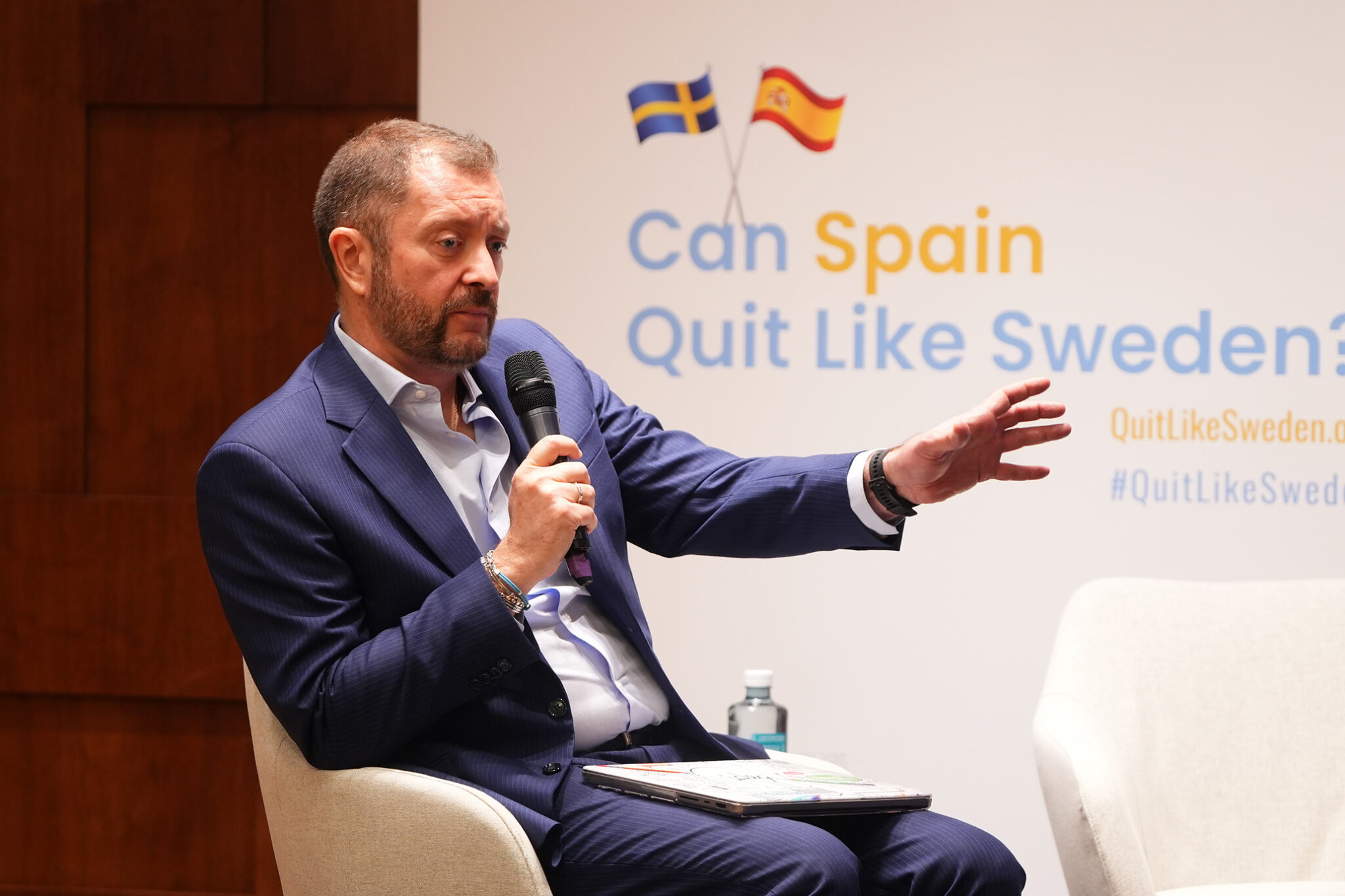
Montanari reinforced his arguments by referring to the failed experience of Germany, a country with 17 million smokers, where nicotine pouches are "de facto" banned because of a legislative classification. In recent years, German consumers have turned to the black market to meet their demand, giving rise to new problems such as illegal and unregulated products. He also stressed that the extreme restrictions on nicotine pouches currently being proposed will make those products "de facto" banned in Spain as well.
This is despite the fact that a nationwide March 2025 survey of German adults found nicotine pouches are an effective alternative to smoking. Seventy-five percent of respondents had chosen nicotine pouches for health-related reasons for reducing or quitting smoking.
Furthermore, 82% opposed the planned restrictions proposed by the government, especially the restriction of flavors. Revealingly, 28% said they would smoke again if their favorite flavors were no longer available, 39% would seek them out in alternative channels and 66% would use other nicotine products.
Event Highlights
Speakers
Suely Castro
Director, Quit Like Sweden
A long standing harm-reduction advocate who has spent nearly two decades assessing global Tobacco Control efforts, and promoting accessible, acceptable, and affordable alternative nicotine products, inspired by the Swedish experience.
Dr. Anders Milton
Former Chairman, World Medical Association
Physician, CEO of Milton Consulting, and former Chairman of the World Medical Association. A highly sought-after healthcare consultant, he is the current Chair of the Snus Commission and the board chairman for multiple foundations and life science companies.
Dr. Konstantinos Farsalinos
Cardiologist, Public Health Expert
Physician (Cardiologist), Public Health Expert, and Research Associate at the Universities of Patras and West Attica. He has published over 110 studies on smoking and tobacco harm reduction since 2011, and was declared a Highly Cited Researcher 2019 by the Web of Science.
Professor Miguel de la Guardia
Emeritus Professor, University of Valencia
Emeritus Professor of Analytical Chemistry at Valencia University. He has an H-index of 93 from nearly 1,000 published papers and has supervised 38 PhD theses. He is the Editor-in-Chief of the Microchemical Journal (Elsevier) and was awarded the Chevallier dans l'ordre des Palmes Académiques.
Lorenzo Montanari
Vice President, Tholos Foundation
Vice President of International Affairs for the Tholos Foundation, a Washington, D.C.-based think tank. He co-founded the international platform "Prohibition does not work" and organizes the International Coalition Meeting. He is the editor of the International Property Rights Index and the Trade Barrier Index.