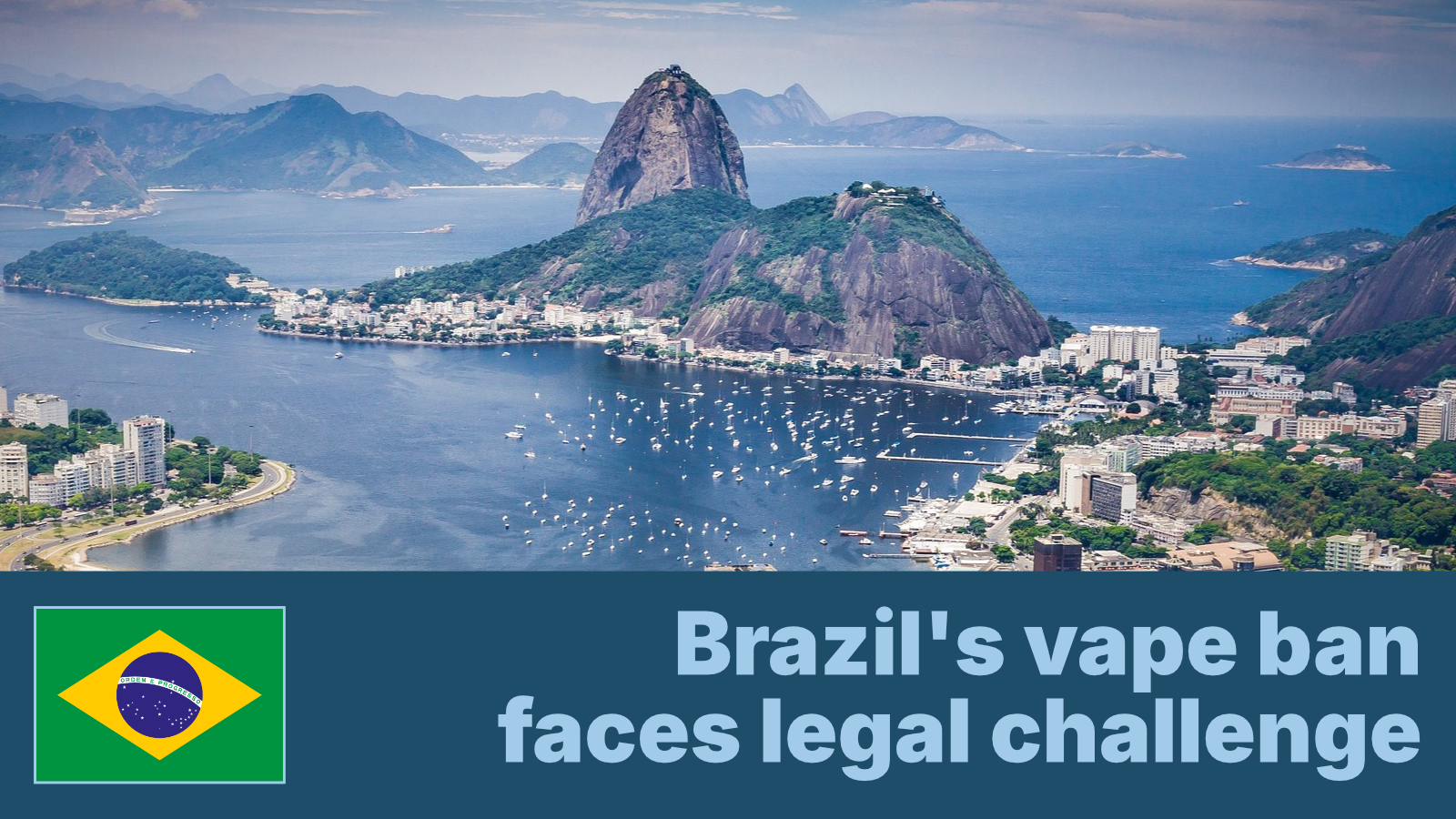
Recent developments in Brazil highlight a growing institutional divide over how vaping products and other alternatives to combustible cigarettes should be addressed from a public health and regulatory perspective.
Two recent initiatives by the Federal Public Prosecutor's Office (Ministério Público Federal – MPF) and the National Health Surveillance Agency (Anvisa) highlight the absence of a unified regulatory approach. Rather than a coherent national strategy, Brazil appears to be navigating conflicting institutional signals, with significant consequences for consumers and public health.
Since 2009, Brazil has banned the commercial supply of vaping products while allowing personal use, creating a regulatory imbalance. This has contributed to a growing illicit market, limited product oversight, reduced consumer transparency and greater difficulty in monitoring youth access.
In 2024, Anvisa upheld the ban through Resolution RDC No. 855/2024 despite opposition from consumers and experts who questioned its effectiveness. Critics pointed to countries such as Sweden and New Zealand, where regulated, accessible and affordable alternatives have been associated with sustained declines in smoking while maintaining strong youth protections.
At the end of January 2026, the Federal Public Prosecutor's Office in Minas Gerais filed a civil public action before the Federal Court. The prosecutors argued that prohibition has not prevented widespread availability. Instead, it has contributed to regulatory blind spots, enforcement challenges and consumer exposure to unregulated products.
The lawsuit calls for replacing the ban with a strict regulatory framework to improve product standards, oversight and consumer protection. It argues that regulation would better serve public health objectives, including youth protection, and seeks one billion Brazilian reais in damages for alleged risks caused by prolonged regulatory inaction.
More than fifteen years of prohibition have failed to curb widespread availability, raising questions about whether the current approach can deliver different outcomes.
Internationally, several countries permit vaping products under clear regulatory frameworks. In these contexts, regulated access to safer alternatives to combustible cigarettes has been associated with sustained reductions in smoking prevalence.
Sweden's experience demonstrates that regulatory frameworks combining oversight with availability, accessibility and affordability of lower-risk alternatives can coexist with strong youth safeguards and sustained smoking reduction.
Following the lawsuit, Anvisa and the Federal Public Prosecutor's Office agreed to strengthen enforcement against illicit trade. While legitimate, intensified enforcement does not address the broader reality that more than fifteen years of prohibition have failed to curb widespread availability, raising questions about whether the current approach can deliver different outcomes.
Taken together, these developments underscore Brazil's unresolved policy debate. One institutional pathway questions whether prohibition is delivering public health gains. The other doubles down on enforcement of the existing ban.
For people who smoke, the implications are tangible: without regulated alternatives, those seeking to move away from combustible cigarettes face illicit supply, uncertain product standards and limited consumer protections. For policymakers, the question remains whether enforcement alone can address these realities, or whether a regulated framework for safer alternatives would be more effective and transparent.
For international observers, Brazil's experience illustrates a broader global tension: how to balance public health protection, regulatory control and the practical consequences of prohibition in a market where demand persists.